The 7% Solution: Why DIVP Could Be the Smart Income Play for a Value-Starved Market
A Look At The Cullen Enhanced Equity Income ETF (DIVP)

For U.S. income investors, the Cullen Enhanced Equity Income ETF (DIVP) is a new player in the expanding global universe of “enhanced income” or “covered-call + dividend” ETFs. DIVP, which began trading March 6, 2024, is designed to provide current income and the potential for equity appreciation through exposure to dividend-paying stocks with an active covered call strategy overlay.
The Core Idea
DIVP is based on large-cap, dividend paying stocks with “value” characteristics. In other words: stable businesses, lower valuations and reliable dividends. That provides the fund with baseline income from cash dividends and the opportunity for capital appreciation.
DIVP layers a covered call strategy on roughly 25-40% of its stock holdings. In simple terms:
- The fund owns a stock.
- It sells a call option on that stock (i.e. provides someone else the right to buy it at some pre-set “strike price” up to expiration).
- In exchange, the buyer pays a front-end premium (cash).
- If the stock remains below that strike at expiration, the call expires worthless, and DIVP pockets the premium (booking even more income).
- Should the stock go up beyond the strike, it might be called away/sold,
The call premium serves as a source of income. It’s a trade-off: You give up some upside in return for more consistent yield.
Cullen is aiming for a gross yield of ~7% (dividends + call premiums) for DIVP, in line with the historical performance of the enhanced equity income sleeve. The firm also notes that this structure can serve as an “alternative to bonds” — delivering yield but still having exposure in equity markets.
It’s worth noting you’re taking capped upside and keeping some equity risk. For a lot of income-oriented investors, however, that trade-off is just fine or even preferable.
Number of holdings & allocation
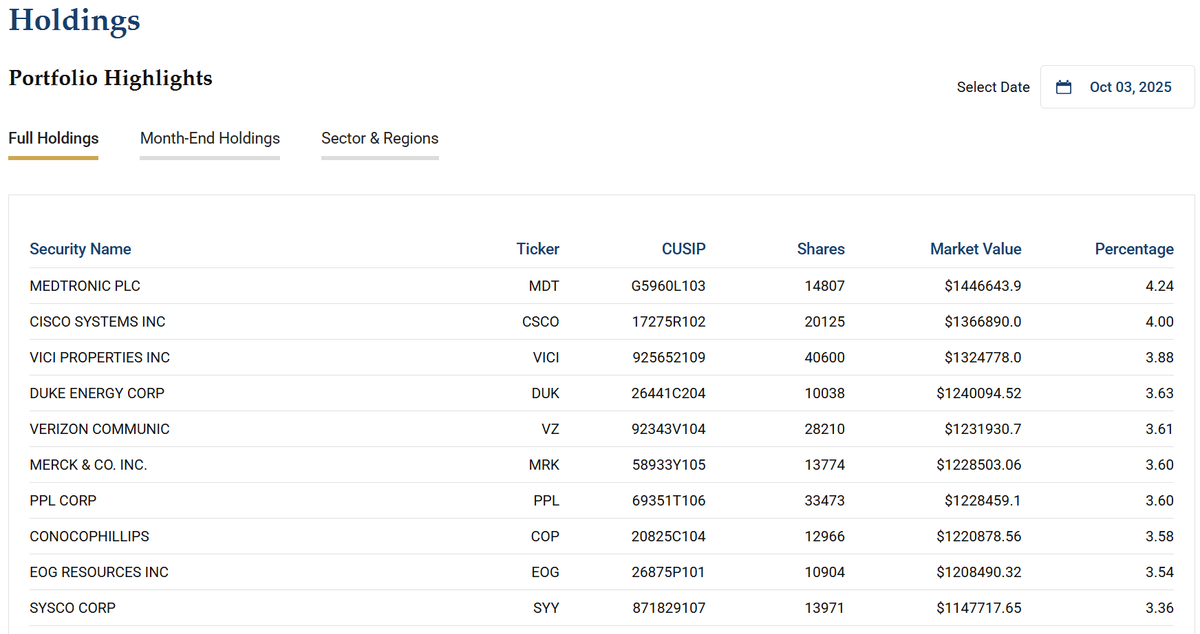
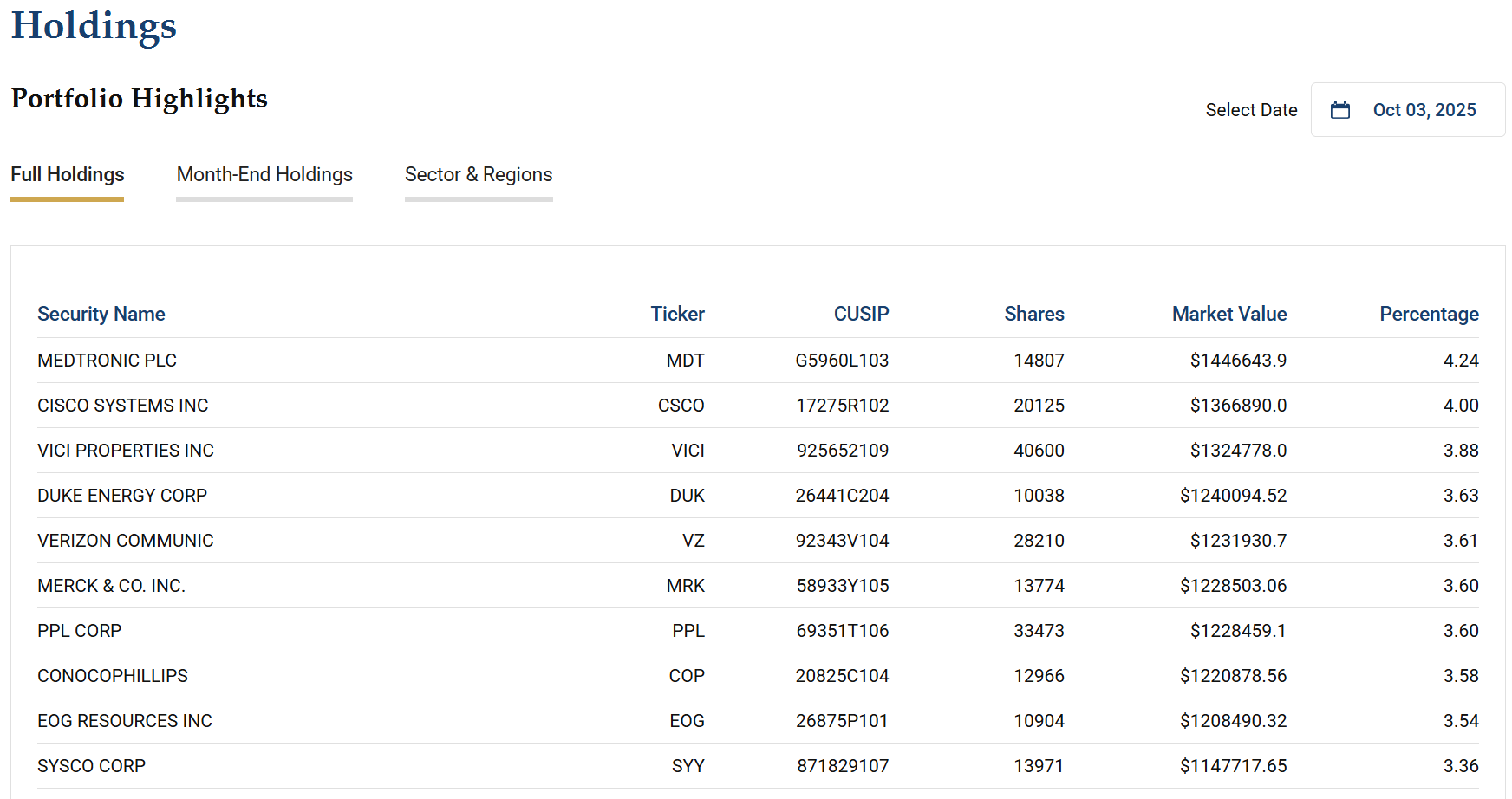
DIVP still typically maintains 30-40 equity positions—a semi-concentrated, actively managed portfolio. Its top 10 holdings represent ~35-40% of its total assets, suggesting moderate concentration.
According to recent filings, these are the biggest holdings:
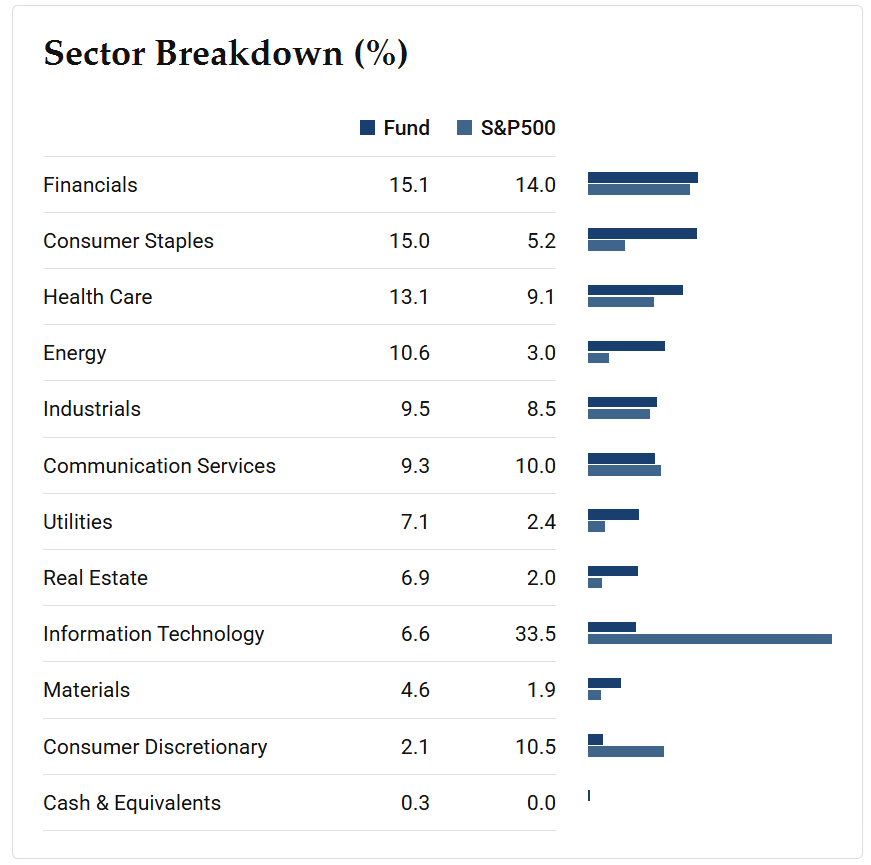
On the sector front, DIVP is underweight technology and expensive growth areas and is favoring more traditional, stable sectors (utilities, and energy).
Distributions & yield
DIVP pays monthly dividends. In December 2024, for example, it distributed $0.32 per share (a larger end-of-year distribution)¹². In January 2025, it paid about $0.14 per share, corresponding to a trailing yield in the ~7.15% range given its trading price (~$25).